Energy Efficient Window Treatments for Australian Homes
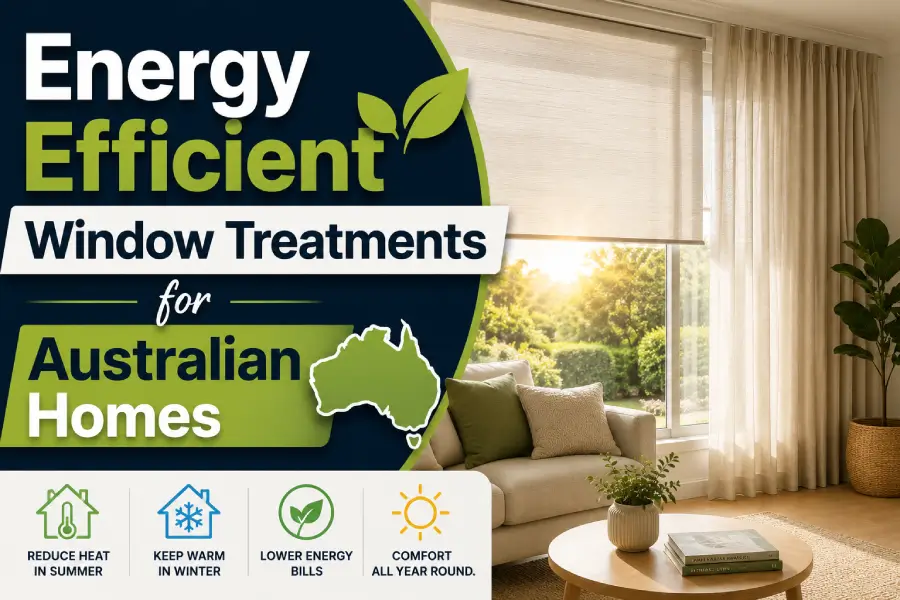
Your windows are the weakest point in your home’s thermal envelope. In summer, heat pours through the glass. In winter, warmth leaks out. The right window treatment reduces both problems and takes load off your air conditioning and heating, which lowers your energy bills.
How much difference does it make? Studies in Australia have shown that well fitted internal window coverings can reduce heat gain by up to 50 percent on sun facing windows. External shading products like motorised zip screens can reduce heat gain by up to 80 percent because they stop the energy before it reaches the glass.
Here is how different products perform:
Sunscreen roller blinds reflect a portion of solar energy back through the glass. A fabric with 5 percent openness blocks about 95 percent of UV and a substantial portion of radiant heat. Light coloured sunscreen fabrics reflect more heat than dark ones. These are the most cost effective internal product for heat reduction.
Double roller blinds add a blockout layer behind the sunscreen. The air gap between the two layers acts as a small insulation buffer. This combination gives you daytime heat management and nighttime thermal insulation in one product.
Sheer curtains reduce heat gain to a lesser degree than sunscreen roller blinds, but they provide some insulation through the fabric layer and the air pocket between the curtain and the glass. Heavier lined curtains provide better insulation but block more light.
Plantation shutters offer moderate thermal performance. The solid louvre panels stop direct sun when closed, and the air gap between the shutter and the glass provides insulation. They are not as effective as a purpose made thermal blind, but they manage heat while allowing airflow when the louvres are open.
External blinds are the most effective option overall. Stopping heat before it reaches the glass is always more efficient than managing it after it gets inside. Motorised zip screens on west facing windows and outdoor living areas make a measurable difference to indoor temperatures on summer afternoons.
The practical approach for most homes: Use external shade on the hottest exposures. Use sunscreen rollers or double rollers on internal windows. Use curtains with thermal lining in bedrooms for nighttime insulation. This layered approach gives you year round performance without relying on a single product.
Book a consultation and we can assess your home’s exposure and recommend the right combination for your energy goals.